A collector turned friend in Portland sent me a link to an article from The Guardian recently, and I found it intriguing and counted myself lucky that through my artwork I am connected with so many people across the country that get me!
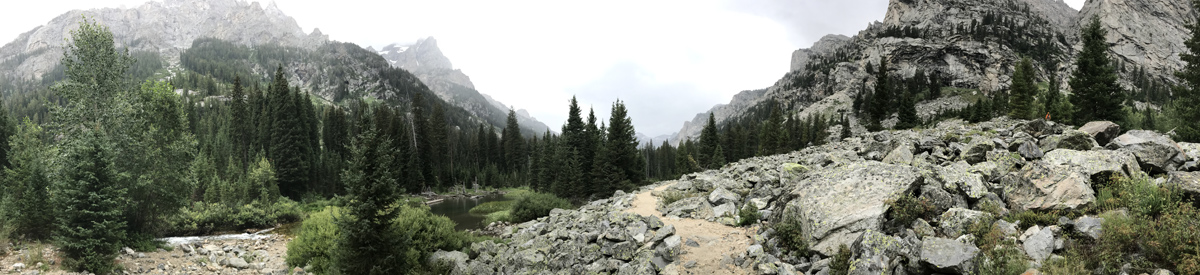
Lairig – ‘a pass in the mountains (Gaelic)
In the article, Robert Macfarlane points out that language is a living organism, where new words come in to prominence and others sometimes fade, reflecting the changes in the society where they are used. He gives examples of this from the Oxford Junior Dictionary. The new ones coming in are firmly tied to the digital age – blog, broadband, chatroom, etc., while many of the ones going away are tied to the natural world – words like acorn, dandelion, willow and pasture. Now it’s not that those words are considered obsolete, it’s just that Oxford determined that children are going to need to know about bullet-points before buttercups. I can’t say I disagree, although regretfully. But I can say that I am glad I needed to know about the acorn and it’s tiny little hat that featured prominently in my imagination, the willow in our backyard that was my fort and climbing tree of choice, dandelions for wishing and pastures for running.
Macfarlane goes on to tell of his (and others’) efforts to catalogue words, many that are obsolete that describe landscape, and one of my favorites (that I also would have loved to know as a child) was smeuse – an English dialect noun for “the gap in the base of a hedge made by the regular passage of a small animal”. I can totally picture it, and I bet you can too. There is debate about if or how language shapes its speakers’ view of the world, a theory called linguistic relativity. What isn’t debatable, however, is how language evolves to reflect what its speakers prioritize. What we focus on has unquestionably shifted, and the words are following suit.
Despite Macfarlane’s quest to build the taxonomy of the landscape he also acknowledges that:
“There are experiences of landscape that will always resist articulation, and of which words offer only a distant echo. Nature will not name itself. Granite doesn’t self-identify as igneous. Light has no grammar. Language is always late for its subject. When I see a moon-bow or a sundog, I usually just say “Wow!” or “Hey!” Sometimes on a mountain, I look out across scree and corrie, srón and lairig – and say nothing at all.”
I like to think that my work replaces some of those words, is the gentle “wow” or ” hey” that gives our collective awareness a nudge back to the natural world with or without the words to accompany it, where we can step away from the screen and look up and out. Maybe next time you do, you’ll spot a smeuse.
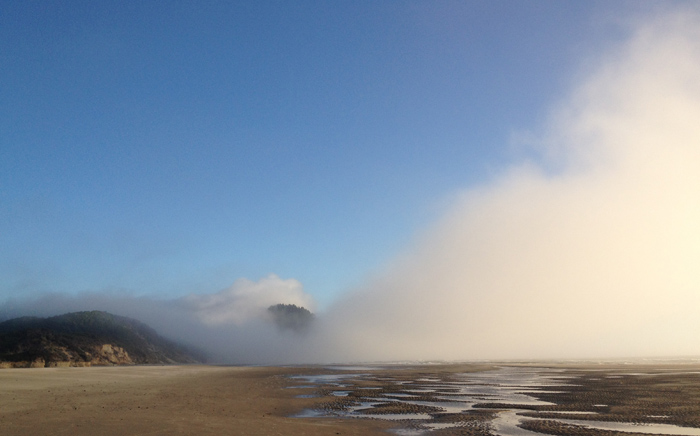
schreep – ‘mist that is slowly clearing’
One Comment
So beautiful! Chris, if you haven’t done so already, I hope you’ll read Lori Brack’s enchanting, literally, essay in Entropy (online). She’s so much about nature. Take out what words Oxford sees fit, I’ll always hang on to my American Heritage unabridged, which traces words to our ancient Indo-European past. It’s a treasure.